Five Minutes of Nothing: The Website I Built to Go Absolutely Nowhere
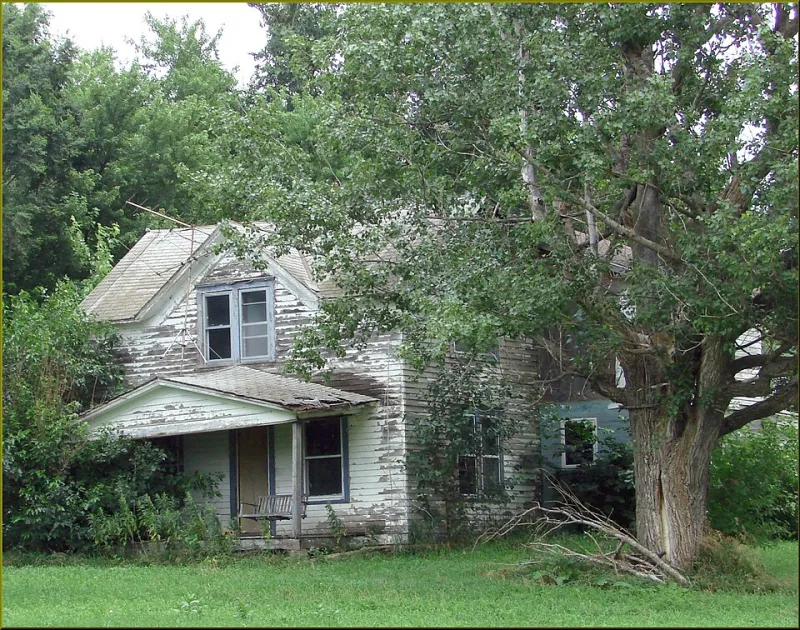
Photo: inkknife_2000 (7.5 million views +), CC BY-SA 2.0, via Wikimedia Commons
Somewhere between the fourth and fifth minute of watching my own webpage do absolutely nothing, I realized I was smiling.
The page is called Idle. It's one HTML file. A pale gray background, a single line of centered text that reads "this page is not loading anything", and a small clock in the corner, ticking. That's it. No newsletter popup. No related articles. No cookie banner threatening me with consent theater. The cursor doesn't blink. Nothing pulses. It's the digital equivalent of a porch swing in a neighborhood where nobody's in a hurry.
I built it because I'd been thinking about how every square inch of the modern web is optimized to earn something from you — a click, a scroll, a dwell time metric some dashboard can chart. And I wanted to make a page that earns nothing. One that just... is.
The Rules of Doing Nothing
I gave myself three constraints. First, the page can never update its content — the clock is the only moving part, and clocks don't count as content. Second, no analytics beyond a raw hit counter, because tracking engagement on a page designed to disengage felt like a joke I'd regret. Third, and this one hurt: no easter eggs. No hidden Konami code. If someone found a secret, the page would suddenly have a purpose, and purposes are what I was trying to escape.
I put it live on a Tuesday and linked it once from my homepage, described only as "a place to sit."
Who Stays on a Page Like This?
The hit counter told me people were showing up. What it couldn't tell me was why anyone stuck around, so I added a tiny, optional text box at the bottom: "how long did you stay, and why?" No email required. No name. Just a box.
The responses came in slowly, like postcards.
A night-shift nurse in Ohio wrote that she keeps the page open on her work tablet between patients. "It's the only tab that doesn't want anything from me," she said. "It's like a waiting room with no appointment."
A guy in Portland told me he uses it to prank his coworkers — he mirrors it onto their second monitors so it looks like a frozen browser. But he admitted he leaves it up afterward. "The frozen tab wins. It outlasts everything else I have open."
My favorite came from a retired high school teacher in Georgia: "I sat with it for six minutes. I can't tell you the last time I did anything for six minutes without a reason. I think this might be church for people who don't have one."
Six minutes. On a webpage with one line of text. There are billion-dollar platforms that would commit minor crimes for that kind of dwell time.
When Did 'Useful' Become the Only Allowed Feeling?
Here's the thing that kept nagging me: the internet used to be full of rooms like this. Personal homepages with hit counters and under-construction GIFs that stayed under construction for a decade. Pages that existed because someone felt like making them, not because a roadmap demanded they drive a KPI. Somewhere along the way — call it the platform era, call it the engagement economy — we decided that a page must do something to justify existing. If it doesn't convert, it fails. If it doesn't update, it's dead.
But nobody stands in front of a fire and asks what its conversion rate is. Nobody evaluates a porch swing on time-on-device.
The visitors to Idle kept reaching for physical comparisons. A bench. A pond. A rest stop. One person called it "the load-bearing nothing of my browser." I think that's exactly right — the page works precisely because it refuses to work on you.
The Case for Useless Pages
I'm not arguing the whole web should be this. Most of the internet has jobs to do, and thank goodness — I like maps and recipes and being able to renew my car registration without mailing a check. But I've noticed something in myself, and apparently in the strangers who sat with my empty page: a low-grade exhaustion with destinations. Sometimes you don't want a tool, an article, or a feed. You want a room.
So here's my modest proposal, and I mean it only half-jokingly: build one. A page that does nothing. Put it somewhere quiet. Don't promote it. Then check the hit counter in a month and read the notes people leave, and tell me the internet is only a machine for capturing attention.
Some of us just want to sit on the porch a while. Turns out, if you build the porch, they will come — and, more remarkably, they'll stay.
The clock's still ticking, by the way. That's the whole show.