Hunting Ghosts on the Dial: Notes from the People Who Listen to Nothing
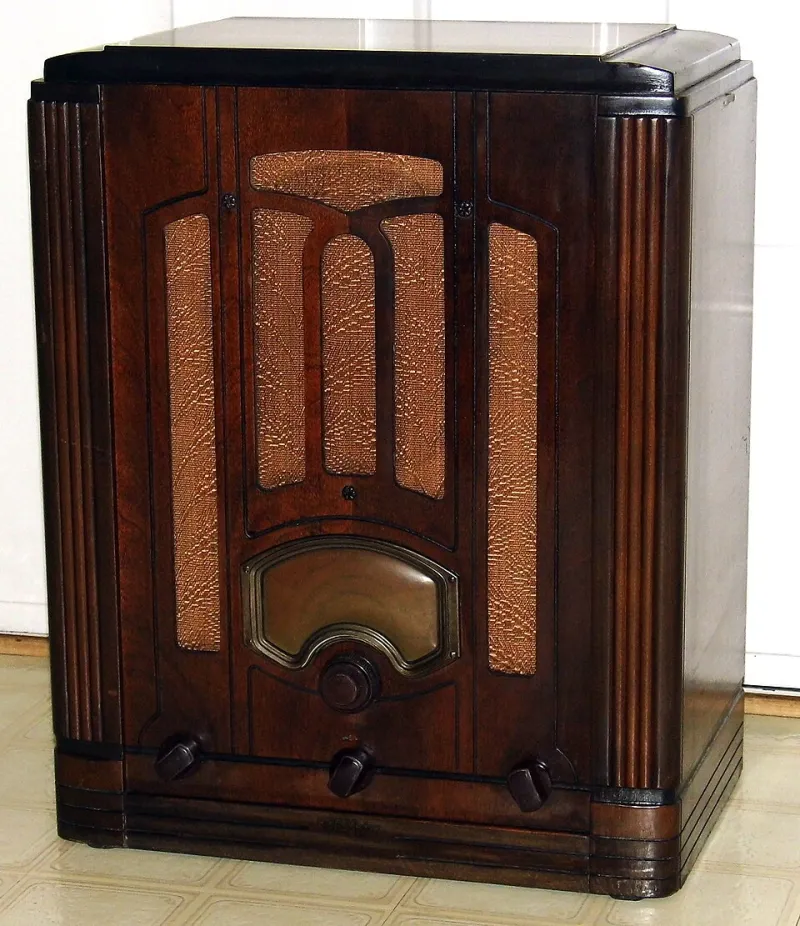
Photo: Joe Haupt from USA, CC BY-SA 2.0, via Wikimedia Commons
At 3:12 a.m. somewhere over Nebraska, a shortwave radio in a shed in rural Virginia starts speaking numbers. A woman's voice, flat as drywall, reads seven digits in German, pauses, repeats them, then a burst of what sounds like a piano chord played through a malfunction. Then nothing. This has been happening, on and off, since the Cold War, and nobody officially knows why — though everyone unofficially does.
This is a number station, and it is one of the many things living in the gaps of the dial. For most people, the space between radio stations is a failure — dead air, hiss, the sound of nothing. For a small, devoted tribe of American hobbyists, it's the most interesting part.
The Signal in the Noise
Number stations are the headliners of what enthusiasts call "utility DXing" — the hobby of hunting down transmissions that were never meant for you. The stations are widely believed to be coded messages broadcast to intelligence operatives abroad. A spy with a shortwave receiver, a one-time pad, and good handwriting can tune in and write down their instructions. No internet trail. No server logs. Just a voice and some numbers, drifting over borders like weather.
The most famous, the "Lincolnshire Poacher," reused an old English folk melody as its interval signal for decades. The "UVB-76 buzzer," a Russian shortwave frequency that has emitted a repetitive droning tone since the late 1970s, has its own fandom, its own wiki, and a small panic every single time it stops buzzing for a few minutes. It always starts again. Nobody relaxes.
What fascinates me about these stations is that they're accidental art. Nobody composed the buzzer to be haunting. It's haunting because it's a machine doing its job with total indifference, in a frequency band nobody else wanted. The emotion is entirely ours. We're the ones projecting narrative onto static — which, if you run a website called myxy554, you'll recognize as essentially my whole business model.
The Dead Channels of the UHF Wasteland
Shortwave isn't the only haunted band. Anyone who grew up in American suburbia in the '80s or '90s remembers channel 13, or 23, or 56 — the UHF channels your market never had. Turn the dial there and you got snow, occasionally with a ghost of another station bleeding through, doubled and warped like a face pressed against glass.
That snow wasn't meaningless. It was, famously, a portion of the cosmic microwave background — leftover radiation from the beginning of the universe, delivered to your living room by an antenna on the roof. Every kid staring at a dead channel after midnight was, technically, watching the Big Bang. No one told us. We found out years later, on the internet, and felt cheated and amazed in equal measure.
The analog TV shutdown in 2009 killed most of that. Digital signals don't degrade into snow; they just stop. A dead channel now is a flat blue nothing. The static — the real static, the kind with the universe in it — is gone from the living room and survives only in archives and old CRTs in basements.
The Archivists of the Between
Which brings me to the people doing the archiving. There's a network of hobbyists — engineers, insomniacs, one very committed retired air traffic controller I found on a forum at 2 a.m. — who record and catalog the dial's leftovers. They log number station intercepts with timestamps and signal reports. They rip 3 a.m. infomercials off dusty tape and preserve them as unintentional time capsules: the slang, the phone numbers with area codes that no longer exist, the confident promise that you can own real estate with no money down.
Others run internet radio stations with audiences you could fit in a minivan, broadcasting nothing but looped static, fax machine sounds, and interval signals, to listeners who use it to fall asleep. There's an entire genre of this — "numbers station ambient" — that has leaked into pop music, sampled by everyone from Wilco to dozens of electronic producers who've never owned a shortwave radio in their lives.
Why do it? I asked, in so many words, and the best answer I got was from a guy in Ohio who runs a 24/7 stream of an automated NOAA weather voice layered over room tone: "Because someday it stops, and then somebody should have a copy."
That's the whole ethos, really. The static isn't noise. It's a signal nobody's decoded yet — or a message nobody's bothered to save. The hobbyists of the between-spaces are just doing the saving, one hiss at a time. Somewhere between the frequencies, the dial keeps whispering. Somebody, thankfully, is writing it all down.