Please Hold: I Made Every Visitor Sit Through a Ten-Second Curtain Before My Homepage, and Some of Them Applauded
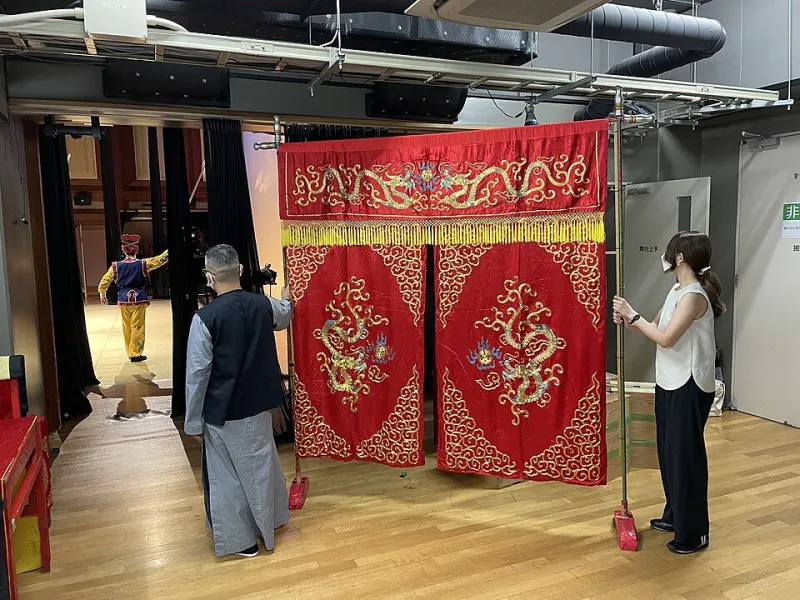
Photo: ウィキ太郎(WikiTaro), Public domain, via Wikimedia Commons
There's a certain kind of website behavior you only notice when you build things nobody asked you to build. Mine is a domain with no obvious purpose — six characters, no meaning, no marketing plan — and for the past few years it has existed mostly as a place for me to try ideas that would get me gently escorted out of any product meeting.
The latest idea came from an old ticket stub I found in a coat pocket: admit one. And it got me thinking about doors. Specifically, about how the web used to have them, and doesn't anymore.
The Curtain Call Nobody Asked For
If you came of age online in the late nineties or early 2000s, you remember the splash screen. The Flash intro. The "click here to enter" page with a spinning globe and a MIDI file of "Green Onions." Websites didn't just open — they began, like a show. There was a lobby. There was a wait. Sometimes there was a guy's name in a fancy font and a hit counter warming up in the background.
Then usability won, and rightly so. Jakob Nielsen called splash screens one of the top design sins of the era, and he wasn't wrong. Nobody wants to watch your logo orbit a cube. The modern web loads straight into the content, or the cookie banner, whichever comes first.
But I kept wondering: did we lose something besides efficiency? What happens to a visitor when a website asks them to wait — on purpose, with no reward promised?
So I built an intermission.
The Rules of the Room
For thirty days, my homepage displayed a full-screen page I called the Lobby. Plain background, one line of text: "The site will begin shortly." A small analog clock ticked down from ten seconds. No skip button. No progress bar doing fake work. Just a countdown, like the lights dimming before a movie.
After ten seconds, the page faded into my actual homepage, which is, I should be clear, not much of a prize: a handful of essays, some experiments, a guestbook that gets a visitor every other solstice.
I logged three things: how many people bounced during the countdown, how many stayed, and — this was the part I actually cared about — what people did after they got in.
Ninety Percent of Everyone Left
Let's not romanticize it. The data was a slaughter.
About 88% of visitors left during the countdown. Mobile users left even faster — some apparently decided at second three that no website on earth was worth this. One referral from a Reddit thread produced a bounce rate that could only be described as unanimous.
And honestly? Respect. Ten seconds of your one wild and precious life, spent watching a clock on a stranger's nothing-website? Leaving is the correct answer. I'd have left too.
But that means roughly one in eight people sat through it. And that's where it got interesting.
The Patient Stragglers
The people who waited behaved differently once inside. They stayed longer. They visited more pages. A few of them — and I want to stress how few, like four — came back multiple times, apparently on purpose.
Then my contact form started filling up, and the messages had a tone I've never gotten from drive-by traffic. There was a shared experience now, a tiny ordeal we'd both survived. One person wrote: "I waited. I don't know why. I feel like I earned this website." Another said the countdown reminded them of waiting for a dial-up connection while their mom picked up the phone in the other room.
The best message simply said: "The wait was longer than the site. Somehow that felt right."
That's the thing I couldn't have predicted. The intermission didn't just filter people — it changed them. Everyone who got past the curtain arrived in the same mood: curious, a little annoyed, weirdly committed. They'd made a tiny investment, and tiny investments make people look around the room.
What the Wait Is Worth
I've spent enough time reading about the old web to know the splash screen wasn't beloved because it was efficient. It was beloved — by the people who loved it — because it was a threshold. It signaled that what was on the other side belonged to somebody. You don't wait for a vending machine. You wait for a person.
There's a version of this that's just dark-pattern nonsense, and I want to be clear I don't think every site should do it. If you're selling something, making people wait is vandalism. But my site isn't selling anything. It's a room I keep, and rooms can have doors.
After the Curtain
The month's over and the countdown is gone. Traffic went back to its usual trickle, and the contact form went quiet again. But I left one thing behind: a hidden page you only find if you sat through the old countdown and remembered the URL I flashed for half a second at second nine. Every couple of weeks, someone new signs it.
Their entries all sound the same, in the best way. "I was here. I waited. Worth it?" followed by another entry, weeks later: "Yeah. Worth it."
Ten seconds is nothing. Ten seconds is also, apparently, enough to make a website feel like a place instead of a page. The trick, it turns out, isn't making people wait. It's making sure that when the lights come up, somebody's actually home.