Closed After Midnight: The Website That Only Opens When America Is Asleep
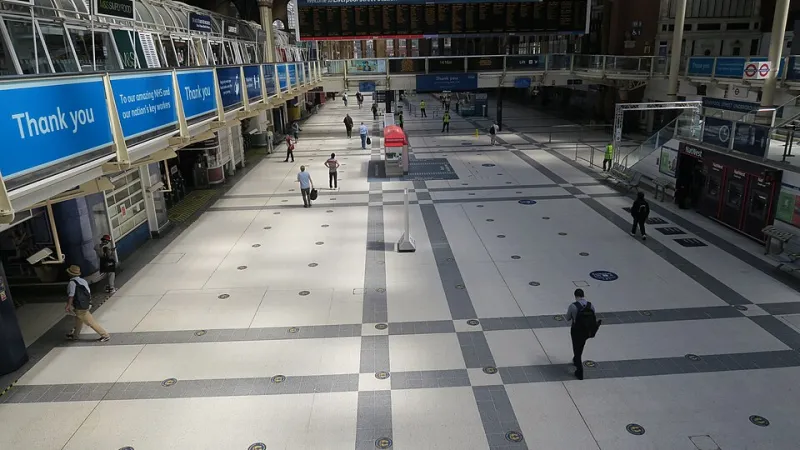
Photo: Kwh1050, CC BY-SA 4.0, via Wikimedia Commons
The internet was supposed to kill the concept of business hours. That was the whole pitch, right? Your corner store closes at nine, but the web never does. It's a 7-Eleven with no locks, a diner where the coffee pot never gets emptied.
So naturally, I did the opposite. I built a homepage that's closed most of the time.
The Rules of the Lock
The setup was stupidly simple. A script checks the visitor's local clock. Between 2 and 4 a.m. — their local time, not mine — the site loads. Every other hour of the day, you get a single line of text: "We're closed. Come back when you can't sleep."
No archive. No cached version worth reading. If you want in, you have to be awake at an hour when most sane people are three REM cycles deep.
I figured I'd get a handful of confused visitors, maybe one angry Reddit thread about gatekeeping, and that would be that. Instead, I got a regulars' table.
The Congregation at 2 A.M.
Within the first week, a pattern emerged in the logs. People weren't just stumbling in — they were returning. Same usernames in the little comment box I'd left at the bottom of the page. Same arrival windows, night after night.
There was a nurse in Ohio who showed up around 2:15 most mornings, right after her shift ended, typing one-liners into the box like she was clocking out loud. There was a college kid in Arizona whose sleep schedule had collapsed so completely that my site was, in his words, "the only thing with consistent hours in my life," which is either very funny or very sad depending on the night you ask him.
And there was a guy I only know as jetlag_carl, who appeared at wildly different hours and finally explained himself: he flies for work, three time zones a week, and my homepage had become his way of proving he still existed somewhere. "Your site is always open somewhere for me," he wrote. I have thought about that sentence more than any sentence anyone has ever said to me in person.
The 3 A.M. Contingent
The heart of the traffic, predictably, landed around 3 a.m. — the witching hour, the hour the memes warn you about, the hour when the entire machinery of the internet seems to drop its customer-service voice.
And honestly? The comments at 3 a.m. were the best writing on my site. Unedited, unguarded, weirdly honest. People confessed things they'd never post at noon. One woman wrote an entire paragraph about missing her late father, then followed up the next night with "anyway. how's everyone." That's the 3 a.m. register: devastating, then immediately deflecting.
It reminded me of late-night AM radio, or the people who call into the 2 a.m. local news swap shows. There's a specific honesty that only happens when you believe nobody normal is watching.
What a Closing Time Does to a Website
Here's what I didn't expect: the closing changed how people behaved. Because the site was only open two hours a day, showing up felt like an event. Scarcity did something no analytics dashboard ever could — it made people care.
Some folks told me they set alarms. Actual alarms. To visit a homepage with a comment box on it. One person wrote, "I like that it doesn't want me here all day. Nothing else on the internet feels like that."
That's the part I keep chewing on. Every app I own is engineered to be open forever, to ping me, to win the fight for my attention at any hour. My little site won attention by refusing it. The lock on the door was the feature.
What Happens When the Sun Comes Up
After thirty days, I shut the experiment down — or rather, I let the site keep its hours, because turning it off felt like evicting someone. The regulars have mostly drifted, as night crowds do. But a few still check in, and jetlag_carl still leaves a note from whatever airport he's stranded in.
The internet never closes, we're told, and that's sold as a blessing. But a website with business hours taught me something the always-on web can't: a space that closes gives the people who show up on time a reason to belong to it. The day shift gets convenience. The night shift gets a clubhouse.
If you visit my homepage at noon, it'll tell you to come back when you can't sleep. Take it up on the offer sometime. The regulars are good company, and the coffee — metaphorically speaking — is always fresh.