Finished. Done. Closed. The Radical Art of the Website That Ends
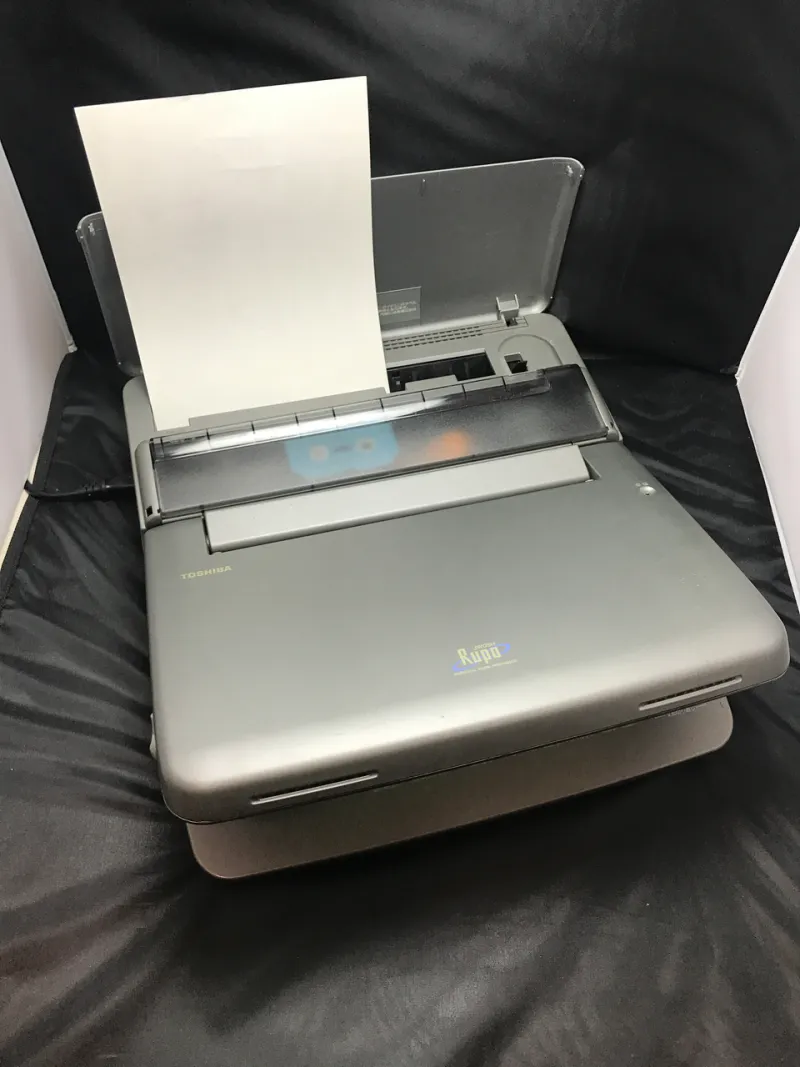
Photo: Yoh-Plus, CC BY 4.0, via Wikimedia Commons
There's a genre of web page you almost never see anymore: the one that's over.
Not abandoned. Not expired. Not lapsed into domain-registry purgatory like so many of the web's abandoned rooms we've wandered through before. I mean deliberately finished — a site whose creator decided, on purpose, at a moment of their choosing, that the project was complete. A final post. A closing note. Sometimes just a single line: That's all. Thanks for reading.
On today's internet, this reads like a foreign language. So let me make the case for it.
The 'Under Construction' Banner Was a Promise, Not an Apology
Go back and look at the web of the late '90s and early 2000s and you'll find a thousand little shrines to in-progress-ness. The dancing construction worker GIF. The earnest "This page is always changing! Check back soon!" We remember it as charmingly naive, but there was something else going on underneath: a culture where a website was a thing you made, not a thing you fed.
You built a page about your Star Wars fan fiction or your collection of scanned ticket stubs, and when it was done, it was done. The banner came down. Or sometimes it never came down, because finishing was less interesting than building. Either way, the site existed in a bounded way. It had edges.
The modern web has no edges. Your feed has no bottom. Your favorite publication will publish tomorrow, and the day after, forever, because the business model demands it and because we've quietly accepted that a site that stops publishing is a site that's dead.
But is it? Says who?
Interview: The Person Who Walked Away at the Top
In 2019, a personal site I'd followed for years — a long-running, obsessively detailed project documenting regional roadside attractions across the American Midwest — did something almost unheard of. Traffic was peaking. A podcast had mentioned it. And its creator, a guy in Ohio I'll call Dave (he asked me not to use his real name, which tracks), posted a final entry titled simply: "Complete."
"I'd visited every site on my list," Dave told me over email. "All 214 of them. The project was done. What was I going to do, keep writing about a Waffle House-shaped building I'd already photographed from nine angles?"
Dave's site is still up. Every page, every photo, every entry — frozen like a museum exhibit. "People email me asking if I'll add new attractions," he said. "I tell them the same thing: the map is the map. It's finished because I finished it."
When I asked if he ever felt the pull to keep going — the audience, the momentum, the terrifying American imperative to scale — his answer stuck with me: "Finishing it was the only part that was actually mine. The rest was just work."
The Infinite Web Is a Treadmill; the Finished Site Is a Monument
Here's my actual argument. The always-updating web treats every project as a subscription — your attention is the recurring charge, and the content exists to keep the meter running. A finished site refuses that deal. It says: this was worth doing, I did it, and now it stands.
Think about what we lose when nothing is allowed to end. A novel doesn't publish a new chapter every Tuesday until the heat death of the universe. A mural doesn't refresh itself. Completion is what turns activity into work — an artifact with a shape, a beginning, and crucially, a last page.
The sites that end gracefully read differently, too. There's a confidence in a closing note that no endless content calendar can fake. The web's best endings — a beloved forum's final pinned thread, a webcomic's last strip with a thank-you to readers, a blogger's "I said what I came to say" sign-off — feel almost transgressive now. Honest. Human. A person, not a pipeline.
How to End Your Own Corner of the Internet
If any of this lands, here's the practical version. You don't have to delete anything. Ending isn't erasing. You just have to stop — out loud.
Write a closing post. Say what the project was for. Thank whoever showed up. Link to the pieces you're proudest of. Then leave it standing. No RSS zombie posts, no AI-generated filler to keep the domain warm, no rebrand six months later when you get the itch. Just a complete thing, sitting in the sun, finished.
The web could use more last pages. Write one.